 StableMoney
USDS vs DAI: Understanding Stablecoin Mechanics and Collateral
Compare USDS (Sky/Maker) and DAI. Explore the fundamental differences in collateralization, custody, and risk within decentralized stablecoins.
- Topic
- Stablecoins
- Reading time
- 4 min read
- Updated
- 7 Apr 2026
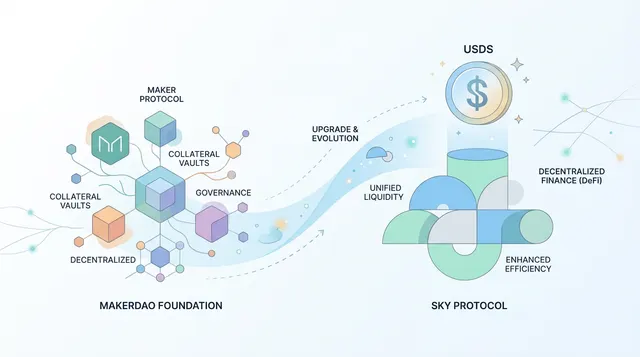
Overview
When exploring DeFi, one frequently encounters stablecoins—digital assets pegged to fiat currencies like the US Dollar. Among these, protocols like USDS (often associated with MakerDAO’s systems or specific governance structures) and DAI represent distinct approaches to achieving this stability. Understanding the difference between them requires moving beyond the sticker price and examining the underlying mechanics of collateralization, custody, and risk management.
This explanation will dissect the foundational differences between USDS and DAI, focusing on how each system achieves its peg and what risks they introduce to their users. We are not discussing investment advice; this is purely educational content, not financial advice.
The Foundation: What is a Decentralized Stablecoin?
Before comparing specific protocols, we must establish the baseline. A decentralized stablecoin is a cryptocurrency designed to maintain a stable value, typically $1.00, by backing it with other assets. Unlike centralized stablecoins, which rely on a single entity’s reserves and trust, decentralized stablecoins rely on smart contracts and over-collateralization to maintain their peg.
Definition: Decentralized Stablecoin
A stablecoin is a cryptocurrency whose price is stabilized against a reference asset, usually a fiat currency, by using a decentralized mechanism, often involving collateralized debt positions (CDPs) or other forms of collateral.
DAI, issued by the MakerDAO protocol, is often considered the foundational example of a decentralized stablecoin. Its core mechanism is built around the principle of over-collateralization. To mint one DAI, a user must lock up collateral—typically cryptocurrencies like ETH or WBTC—with a collateralization ratio significantly higher than the coin's value. For example, to mint 1 DAI, you might need to lock up $150 worth of collateral.
| Feature | DAI (MakerDAO) | USDS (Sky/Maker) |
|---|---|---|
| Collateral Type | Various crypto assets (ETH, WBTC, etc.) | Specific assets defined by the protocol |
| Collateralization Ratio | Typically >1:1 (e.g. 150%+) | Varies based on the specific collateralization strategy |
| Minting Mechanism | Borrowing against collateral via smart contracts | Specific protocol-defined minting logic |
| Governance Focus | Protocol governance (DAO) | Protocol governance (specific governance structure) |

USDS (Sky/Maker): Specific Collateral and Custody
While DAI operates on the general principles of collateralization, protocols like USDS, often associated with specific governance structures or collateral pools (like those managed by MakerDAO or related ecosystems), introduce specific rules regarding what assets can be used as collateral and how those assets are managed. The difference often lies in the *specific collateralization strategy* and the *custody mechanism*.
This refers to the specific rules a protocol sets for which assets can be used as collateral, the minimum required collateralization ratio, and the liquidation thresholds. This is the rulebook for stability.

Mechanics of Stability: Liquidation and Oracle Risk
Both systems rely on automated mechanisms to manage stability when collateral value declines. This is where the mechanics diverge in practice.
| Aspect | DAI | USDS |
|---|---|---|
| Collateral Management | Broad selection, complex risk modeling | Specific asset focus, tailored risk parameters |
| Liquidation Speed | Protocol-dependent parameters | Protocol-dependent parameters |
| Transparency of Assets | Generally transparent via on-chain data | Varies based on collateral pool structure |

Custody and Protocol Architecture
The way assets are held—custody—is another area where protocols can differ. While both systems are decentralized, the underlying smart contract logic dictates who controls the collateral and how it is used.
Ultimately, the difference between USDS and DAI is less about the concept of stability itself and more about the specific engineering choices made by the protocol designers. DAI represents a broad, generalized framework for collateralized stability, while protocols like USDS represent a specific, tailored implementation of that framework, often focusing on particular asset classes or governance models.
Sources & Further Reading