 StableMoney
DeFi Insurance Explained: Nexus Mutual and Risk Management
Understand DeFi insurance with Nexus Mutual and InsurAce. Learn how to manage smart contract risk in decentralized finance.
- Topic
- DeFi
- Reading time
- 5 min read
- Updated
- 7 Apr 2026
Overview
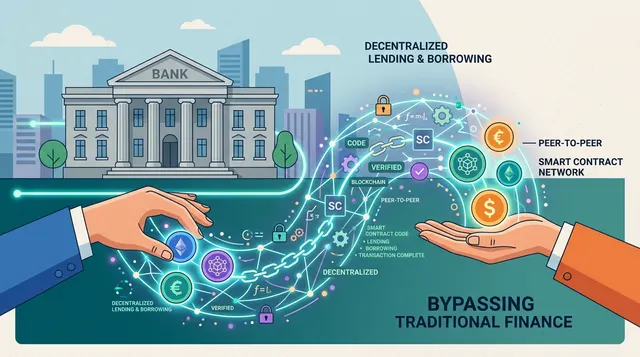
When you move from traditional finance to DeFi (DeFi), you are trading familiar risks for novel ones. In the world of decentralized protocols, the code itself becomes the contract, and the potential for catastrophic loss from bugs, exploits, or oracle failures is very real. This is where DeFi Insurance steps in, acting as an essential safety net for users engaging with these complex systems.
Think of it like buying car insurance. When you drive a car, you accept the risk of an accident; insurance transfers the financial burden of that risk to a large pool. In DeFi, the 'car' is a smart contract, and the 'accident' is a successful exploit or a critical bug. DeFi insurance aims to mitigate the financial fallout when these inevitable risks materialize.
The Inherent Risks of Decentralized Finance
Before understanding the solution, we must understand the problem. DeFi protocols operate on immutable code running on public blockchains. This immutability, while providing transparency, also means that any vulnerability in the code is permanent and exploitable. The risks in DeFi are not just market volatility; they are technical risks inherent in the code and the external data feeds used by the protocols.
Smart Contract Vulnerabilities
Smart contracts are self-executing agreements written in code. If the code contains a flaw—a bug, an oversight, or an incorrect assumption—an attacker can exploit it to drain funds. This is the most direct risk. A failure in the logic can lead to the loss of millions of dollars across an entire protocol.
Oracle Risk and Data Integrity
DeFi protocols often rely on external, real-world data—prices, asset valuations, or external events—to execute their functions. This data is fed into the smart contracts via oracles. An oracle is essentially a bridge, bringing off-chain information onto the on-chain world. If the oracle feeding a price feed is compromised, manipulated, or feeds incorrect data, the automated system will execute faulty logic, leading to incorrect collateralization or massive losses.
Liquidation Mechanism Failures
Many DeFi protocols use automated liquidation mechanisms to manage risk, especially in lending pools. If the mechanism itself is flawed, or if the data used to trigger liquidation is manipulated, the safety net collapses. This is where insurance can provide a layer of protection against these systemic failures.

How DeFi Insurance Functions
DeFi insurance operates by pooling capital from users into a decentralized insurance protocol. Instead of waiting for a catastrophic event to happen, users pay a premium into the pool to cover potential losses against defined risks. This shifts risk management from the individual user to a collective pool managed by a smart contract.
The Mechanism: Pools and Premiums
Protocols like Nexus Mutual establish these insurance mechanisms. A user looking to use a DeFi lending protocol might first interact with the insurance layer. They pay a premium, which is deposited into the insurance pool. If a specific, predefined event occurs (e.g. a specific oracle reports a price deviation, or a known vulnerability is exploited), the insurance contract automatically releases funds from the pool to the claimant.
Real-World Example: Nexus Mutual
Nexus Mutual is a prime example of this concept. It focuses on insuring against smart contract risk. Imagine a user wants to interact with a lending protocol that relies on a specific collateral mechanism. Nexus Mutual provides coverage against the risk that the underlying smart contract logic fails during the transaction. Users pay premiums, and if a contract exploit occurs, the insurance mechanism kicks in to compensate the insured parties.
Comparing Insurance Models
Not all insurance models are built the same way. Understanding the difference between protocol-specific insurance and broader risk pools is crucial for assessing the landscape.
| Feature | Protocol-Specific Insurance (e.g. Nexus Mutual) | Broader Risk Pools (e.g. Insurance Protocols) |
|---|---|---|
| Scope | Specific to a single protocol or asset class. | Broader coverage across various DeFi risks. |
| Mechanism | Directly tied to protocol code and specific triggers. | More generalized risk aggregation. |
| Complexity | Relatively simpler for specific use cases. | More complex governance and risk modeling required. |
| Cost Structure | Premiums are often protocol-specific. | Premiums are pooled across many risks. |
The Economics of Decentralized Insurance
The viability of DeFi insurance depends on sound economics. Premiums must be set correctly to cover potential losses, and the protocol must remain solvent. This requires sophisticated modeling to estimate the probability of an event occurring and the potential magnitude of the loss.
The Role of Liquidity
A crucial element is liquidity. If an insurance pool is filled with assets that cannot be easily converted into fiat or stablecoins when a payout is triggered, the insurance becomes worthless. Successful insurance requires ensuring that the pool has sufficient, accessible liquidity to cover claims.
Governance and Trust
Since these systems are governed by code, trust shifts from human intermediaries to the code itself. Users must scrutinize the governance mechanisms of the insurance protocols. Who controls the parameters for setting premiums and triggering payouts? This governance structure determines the fairness and security of the entire system.
Key Takeaways for DeFi Participants
Understanding DeFi insurance is about recognizing that the technology is powerful but inherently fragile. It is not a panacea, but it is a necessary layer of risk mitigation for sophisticated interactions.
- DeFi Insurance provides a decentralized safety net against the technical failures that plague smart contracts and oracle systems.
- Always assess the risk or warning associated with the specific protocol you are interacting with before depositing assets or engaging in high-stakes activities.
- The success of DeFi insurance depends on transparent, well-governed protocols that accurately model the probabilities of failure.
Sources & Further Reading